
We’ve covered a lot of history!
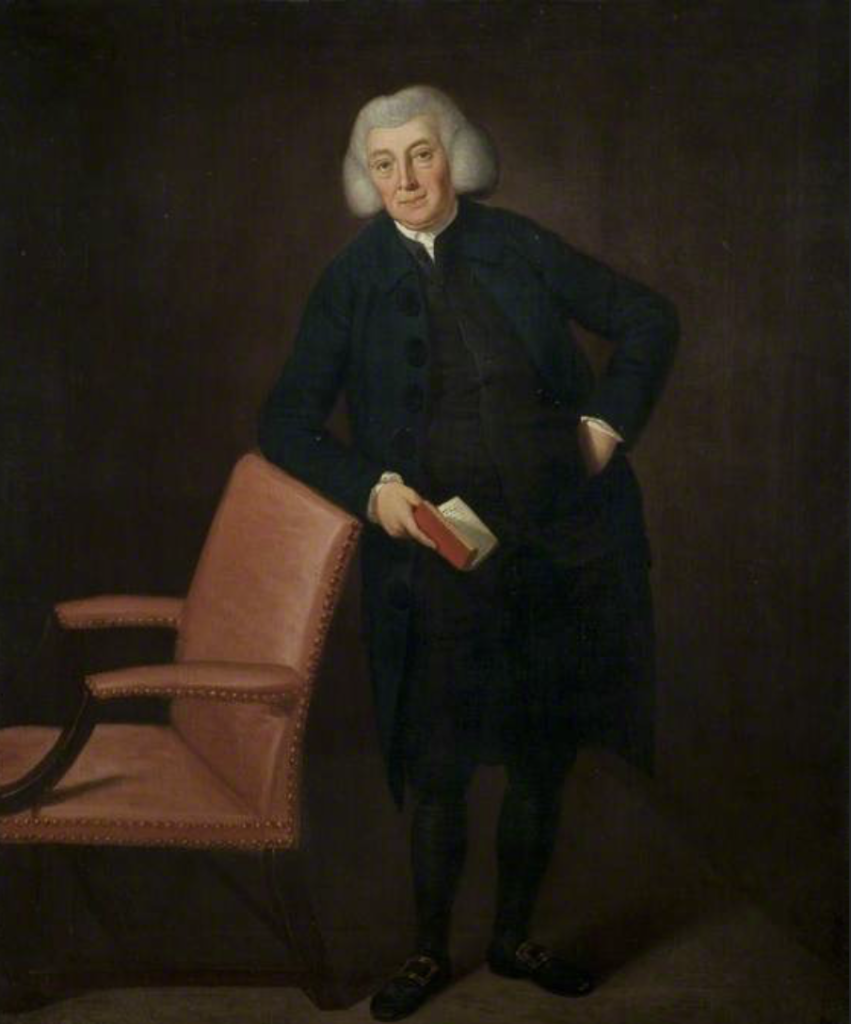
We’re now in the year of 1760. Fort Loudoun has quickly fallen into disrepair, which Reverend Andrew Burnaby, the vicar of Greenwich, England, captures in his journal after a visit to Winchester and a stay in the fort itself.
Winchester is a small town of about two hundred houses. It is the place of general rendezvous of the Virginian troops, which is the reason of its late rapid increase present flourishing condition. The country about it, before the reduction of Fort du Quesne, was greatly exposed to the ravages of the Indians, who daily committed most horrid cruelties: even the town would have been in danger, had not Colonel Washington, in order to cover and protect it, erected a fort upon an eminence at one end of it, which proved of the utmost utility; for although the Indians were frequently in sight of the town, they 75 never dared to approach within reach of the fort. It is a regular square fortification, with four bastions, mounting twenty-four cannon; the length of each curtain, if I am not mistaken, is about eighty yards. Within, there are barracks for 450 men. The materials of which it is constructed are logs filled up with earth: the soldiers attempted to surround it with a dry ditch; but the rock was so extremely hard and impenetrable that they were obliged to desist. It is still unfinished; and, I fear, going to ruin; for the assembly, who seldom look a great way before them […] There is a peculiarity in the water at Winchester, owing, I was told, to the soil’s being of a limy quality, which is frequently productive of severe gripings, especially in strangers; but it is generally supposed, on the other hand, to be specific against some other diseases.
Burnaby’s travels through North America; reprinted from the third edition of 1798 1
Washington between Wars
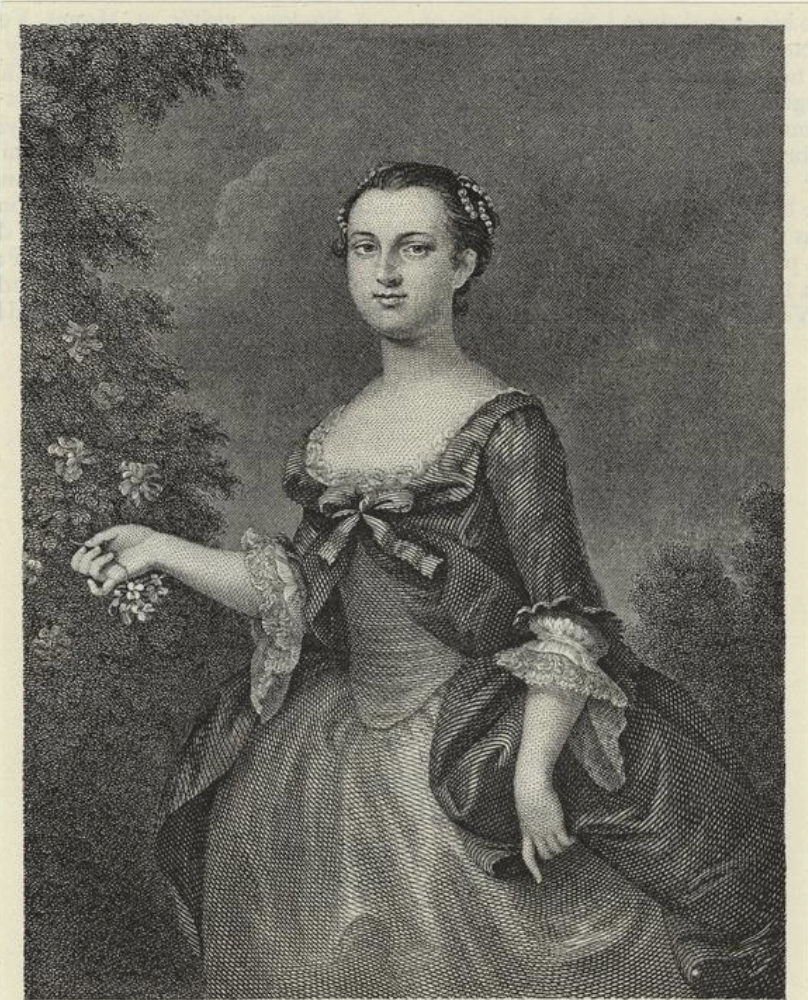
After resigning his commission in the Virginia Regiment in 1758 with the war on the western frontier over, Washington married Martha Custis in 1759. Martha brought to the marriage a very large land holding now making Washington a member of the landed gentry, a status which he coveted and which allowed him to begin his climb to the top of Virginia society. A year earlier George had won a seat in the House of Burgesses thereby launching his political career as well.
During a period of 16 years as a farmer, politician, judge and community leader, he would develop political skills and learn a level of self-mastery, including how to measure his words and consider actions while gauging the consequences of both, all of which would allow him to develop as a patient leader.
After the French & Indian War ended in 1763, a series of actions by King George, the Parliament and British merchants led to tensions between the British and their American colonies. All of these actions were implemented by the British with the intention of paying the debts incurred during the recent war. Famously, in 1765, Parliament enacted the Stamp Act, which though repealed after protests from the colonies was followed by other taxes viewed as onerous in the colonies.
Washington’s political career took a turn at this point because the Governor dissolved the General Assembly and called for new elections due to the building tensions. Until this point George had represented rural Frederick County which commanded less respect than seats from the influential Tidewater region which represented power and wealth. George, now living at Mount Vernon, took the opportunity to run for a vacant House seat from Fairfax County where influential notables such as George Mason and the Fairfax’s lived. George had become prominent in the county as a large land holder, a judge in the county court and from being active in local affairs and civil administration and was successful in winning this seat.
In the new seat Washington gained greater prominence in the House of Burgesses through his appointment to prestigious committees accompanied by increasing influence in government affairs. A significant historical event in December of 1773 would raise Washington to even greater prominence, namely the Boston Tea Party. Following this event, Washington and House colleagues signed a document denouncing the Coercive Acts that shut down Boston Harbor thereby vaulting him to prominence in colonial politics as a leader of the opposition to British control of the colonies.
Because of his activism Washington was elected as a delegate from Virginia to attend the first Continental Congress in Philadelphia in 1774. With this appointment the awkward backbencher of 1759 stood near the pinnacle of colonial politics. Over time he had developed as a leader of the first rank in the largest American colony by providing the blueprint for responding to the crisis with Britain.
Washington was again elected in 1775 to represent Virginia in the 2nd Continental Congress. Notably, in this congress he was appointed to a series of committees related to military matters, which led eventually to the establishment of the Continental Army as proposed by John Adams with Washinton as its commander. He was unanimously chosen to hold this position. With this appointment Washington had reached the pinnacle of influence in the colonies.
George Washington’s success in life may be attributed to the fact that he was a keen observer and had learned and grown since his days in the Virginia Regiment. Furthermore, public office had schooled him in the complexities and crosscurrents of decision-making and, importantly, he listened more than he spoke. He came to understand how the government worked on people as well as how to influence others and how to sense public opinion. He demonstrated that he had mastered the arts of political leadership and persuasion.
From a young age Washington demonstrated an inherent intelligence which, coupled with an ambition to succeed and willingness to learn, made it possible for him to take advantage of unique circumstances that would propel him to eventual greatness. In the end, it would appear that a combination of nature, nurture and circumstances would lead Washington to attain the success that we now know that he was able to achieve.
American Indians during the Revolution Era: 1775 to 1782
When we think about causes of the Revolutionary War, we gravitate to two main themes – the burden of British taxes that followed the end of Europe’s Seven Year War (called the French & Indian War in American) and the drive for American independence from Britain. But there was another motive that is not often addressed: Patriots wanted western land, which was American Indian land.
Countering this was the Indian’s need to maintain their independence and preserve their native lands. They had their own reasons to fight, during both the French & Indian and Revolutionary Wars. The stakes were high as they struggled to feed their families, protect their lands, and preserve their culture and traditions. To them, land was a gift from God, not a commodity to be owned and exploited or to make one wealthy and powerful. Many Indian Nations would side with the British who seemed more committed to recognizing Indian sovereignty.
It is well known that as the country moved to revolution, Washington stood up to defend the cause, becoming the Commander-in-Chief of the Continental Army. Much of Washington’s notoriety during the war revolves around the great battles, the harsh winter at Valley Forge, and his courage, persistence, and leadership. But under Washington’s watch as Commander-in-Chief, there was another side of the war, on the frontier. Bounties were set on Indian scalps, including the scalps of women and children. Soldiers and white mercenaries burned villages, cut down orchards, destroyed crops and stored food, year after year. They plundered, pillaged, and raped. They starved entire populations and burned houses with people trapped inside.
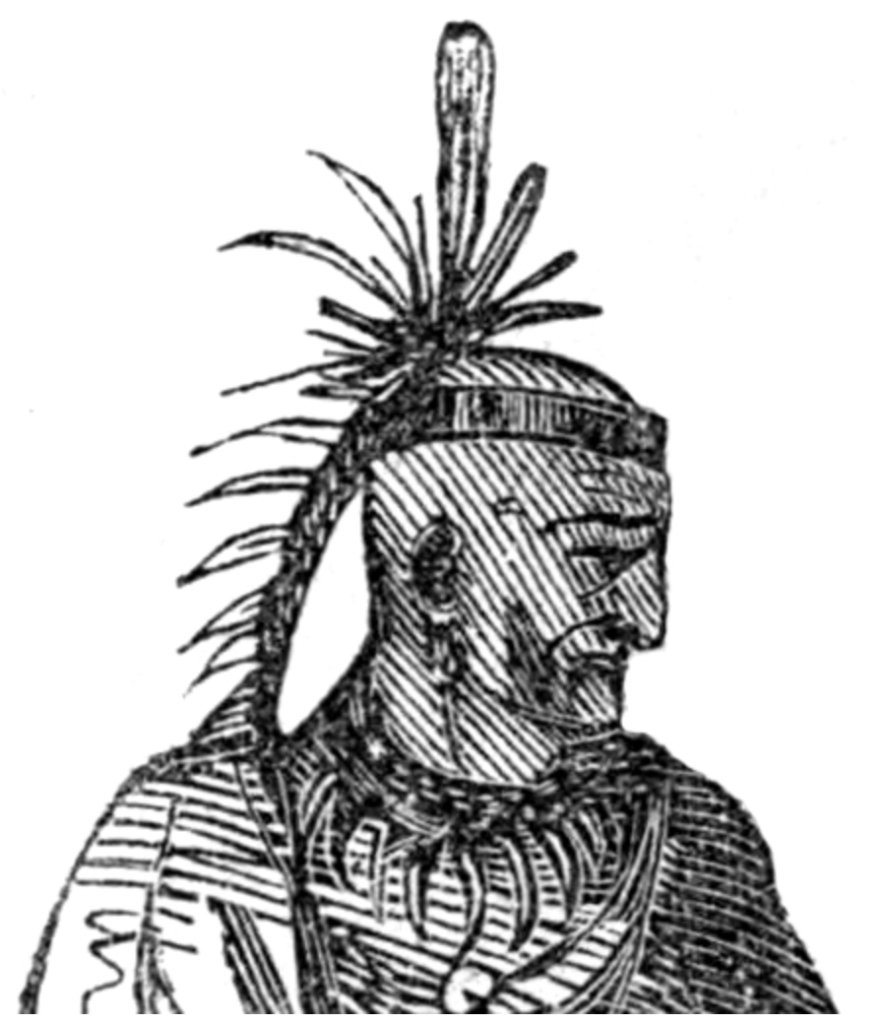
Chief Cornstalk, a Shawnee leader who promoted Indian neutrality during the war between the British and Americans, was murdered along with others, including his son, while on a diplomatic mission at Fort Randolph in 1777. The murders were witnessed by many, including commanding officer Captain Matthew Arbuckle, but the soldiers responsible for the deaths were never held accountable.
On March 8, 1782, militiamen attacked and killed 96 Monrovian Christian American Indian men, women, and children in Gnadenhutten, Ohio, even as they prayed. The murders were promptly avenged by the Shawnee, who captured, tortured, and ultimately burned to death Washington’s close friend, Colonel William Crawford, who famously took the blame for the Gnadenhutten Massacre that was actually led and ordered by Colonel David Williamson. In a letter he wrote to William Irvine, Washington says,
I lament the failure of the former Expedition—and am particularly affected with the disastrous fate of Colo. Crawford—no other than the extremest Tortures which could be inflicted by the Savages could, I think, have been expected, by those who were unhappy eno’ to fall into their Hands, especially under the present Exasperation of their Minds, for the Treatment given their Moravian friends. For this reason, no person should at this Time, suffer himself to fall alive into the Hands of the Indians.
George Washington to William Irvine, 6 August 1782 6
Councils were held. Treaties were signed. Agreements were made and broken as westward expansion and carnage continued. Washington himself did not personally fight the American Indians during this time as he was busy battling the British in the Revolutionary War. However, his hands were not clean of the ruthless American Indian bloodshed on the western and northern frontiers. Under his orders in 1779, soldiers destroyed over 40 Iroquois villages in New York alone, during the Clinton-Sullivan Campaign. Years later, in a powerful letter written to Washington from three Seneca Chiefs, they said,
When your army entered the Country of the Six Nations, we called you the Town-destroyer and to this day, when that name is heard, our women look behind them and turn pale, and our children cling close to the neck of their mothers… When you gave us peace we called you father, because you promised to secure us in the possession of our Land. Do this and so long as the Land shall remain that beloved name shall live in the heart of every Senecca.
To George Washington from the Seneca Chiefs, 1 December 1790
| Pause to explore! Read the full letter to Washington here. The Seneca Chiefs start their letter, To the great Councillor of the thirteen fires. It’s an incredible read. |
The utmost good faith shall always be observed towards the Indians; their lands and property shall never be taken from them without their consent; and, in their property, rights, and liberty, they shall never be invaded or disturbed, unless in just and lawful wars authorized by Congress; but laws founded in justice and humanity, shall from time to time be made for preventing wrongs being done to them, and for preserving peace and friendship with them.
Article 3 of the Northwest Ordinance 8
The Treaty of Paris (1783) officially ended the Revolutionary War. Its terms were decided by men far from the frontier and their view included politics beyond Britain and America. They were concerned with France and Spain, who also had ties to the North American continent. There were trade and economics to consider. In all the talks and negotiations held to complete the Treaty of Paris, the Indian nations had no say, no influence, and no seat at the table.
| Patriot vs. Loyalist During this period, other important yet forgotten figures would choose to be British Loyalists rather than American Patriots. Following the murder of his friend Cornstalk in 1777, Alexander McKee, Deputy Agent of the Indian Department, left Pittsburgh and sided with the British, becoming the British Superintendent of Indian Affairs in Detroit. Born in Pennsylvania, he was the son of a prominent landholder and a Shawnee mother. Throughout his young life, he maintained close family ties with his Shawnee family in the Ohio Country and he chose to fight for their cause, which meant siding with the British. He took with him American intelligence and strong Indian allegiances that would benefit the British. A proclamation was issued, accusing McKee of high treason and all his properties were forfeited. Later, Washington put a price on his head, offering Seneca Chief Cornplanter the huge sum of $300 for his scalp. 9 |
| You can read more about Washington’s relationship with American Indians during his presidency and beyond here. |
Fort Loudoun’s Prisoners of War
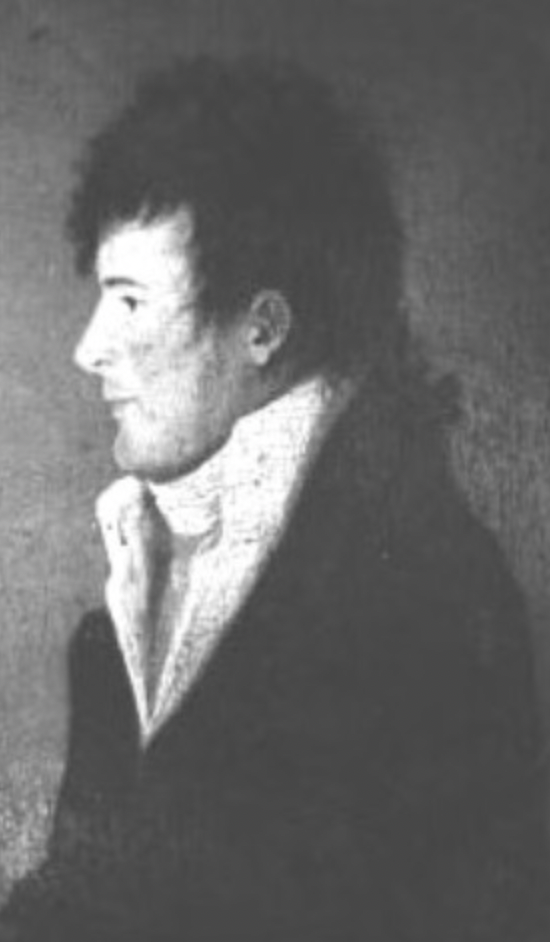
Colonel James Wood was the son of Colonel James Wood Sr and Mary Rutherford; he went on to be the 11th Governor of Virginia from 1796-1799. During the Revolutionary War, he had many roles, including overseeing and leading the Convention Army in Virginia.
When prisoners were captured during the Battle of Saratoga, a convention treaty was signed to govern them, and they were kept in Charlottesville, Virginia. These prisoners were kept in Charlottesville. Colonel Wood moved groups of Hessian and British prisoners from Charlottesville north toward Winchester because the British army was nearing the city. Some of these soldiers were kept at Fort Loudoun, while others continued to move north.
In 1777, Captain Andreas Wiederhold, a Hessian soldier and prisoner captured during the Battle of Trenton, drew a map of Winchester, which provides invaluable insight to historians today!
Plan of the small town of Winchester located in Frederick County in Virginia, which was founded only about 25 years ago, at a time when there was still war with the Indians. From that time, can still be seen, the remains of the fort where General Washington, then Colonel, commanded and himself defended.
Captain Andreas Wiederhold, 1777 12

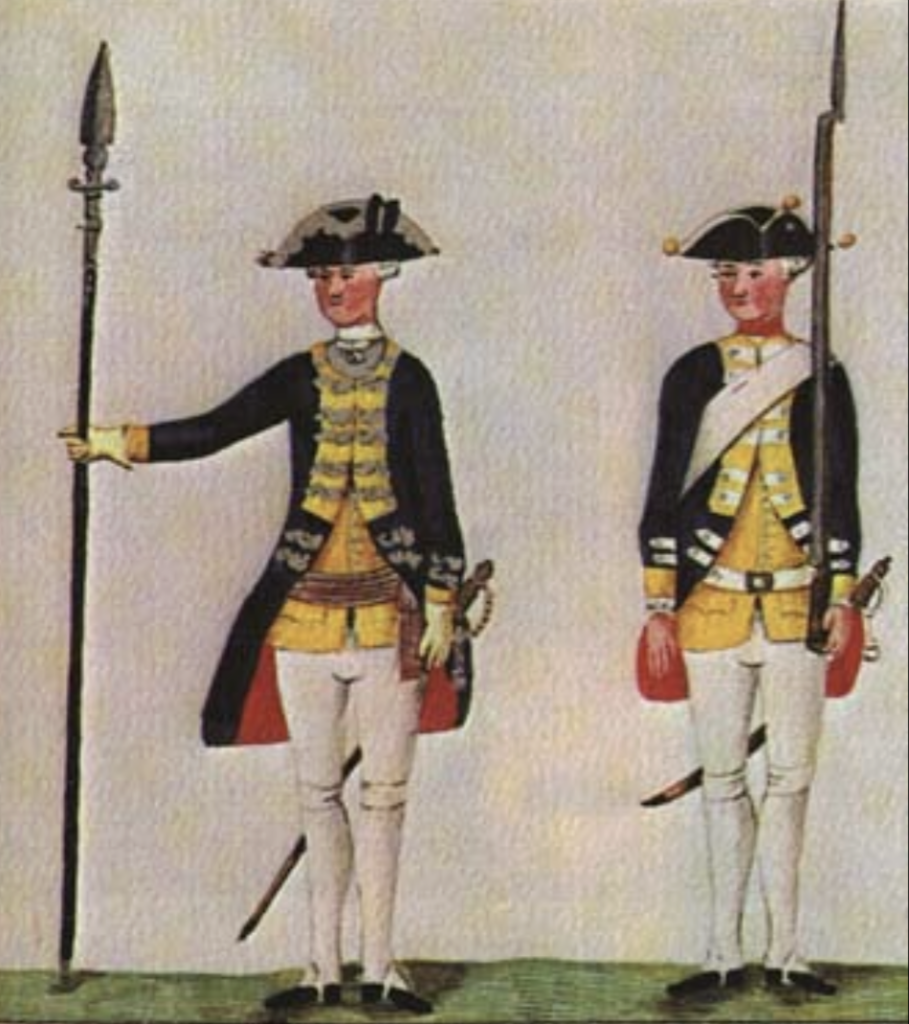
Thomas Anburey was a British officer who served under General John Burgoyne and was captured at the Battle of Saratoga. In 1789, he wrote and published Travels Through the Interior Parts of America, 1771-1781, which has been criticized for its inaccuracies and embellishments, but in it, he does recount his experience as a prisoner at Fort Loudoun:
Winchester is an irregular built town, containing between three and four hundred houses. It was last war, as it is at present, the rendezvous of the Virginian troops, in excursions against the Indians. By an inhabitant who resided in this town during the last war, I was informed, that before we reached Fort du Quesne, the country round about it was greatly ravaged by the Indians, who committed horrid barbarities, and the town itself was in great danger, and would certainly have been levelled with the ground, and its inhabitants massacred, had not Col. Washington (the present famous General) erected a fort upon an eminence at the north end of the town, that fully protected it; notwithstanding the Indians were so bold as to venture in sight of the town, but never within reach of the fort.
The remains of this fort are still to be traced. It appears to have been a regular square fortification, with bastions at each angle, and the length of the curtain between eighty and ninety feet. The barracks are still remaining, which will contain, with ease and comfort, near five hundred men, but upon an emergency would contain twice as many, as is the case at present, there being near that number of our soldiers now quartered in them. These barracks are constructed of logs, in the nature of those at Charlottesville, but upon a far more extensive scale. Since the commencement of the war, the Americans have picketted them in, and converted them into a place of security for prisoners of war.
There appears to have been some attempts to make a dry ditch round the fort; but from the rock being impenetrable, it could not be accomplished.
Thomas Anburey, Travels Through the Interior Parts of America, 1771-1781 14
Fort Loudoun’s Final Years
Washington left Fort Loudoun in June 1758 to go on the Forbes Expedition, placing Lieutenant Charles Smith in command. The fort was not complete and continued to struggle with the lack of adequate funds, as it had since its inception.
By September of the same year, the stonework of the southeast bastion was starting to collapse due to its compromised foundation. The last barracks were still not complete. The well was now 103 feet deep, but John Heintz, who Washington hired to dig the well, still hadn’t reached water. Of the 54 men garrisoned in the fort, 30 were sick and unfit for duty. There was no doctor. The men had no water, firewood, medicine, or basic necessities. There were no materials to finish the barracks and no money to buy them.
Washington briefly returned to Winchester in December, before riding to Mount Vernon. In January 1759, he resigned his command of the Virginia forces but visited Winchester in the following years. Fort Loudoun would never be truly finished, nor house the expected number of men, but served as a key rendezvous point over the next two decades.
Two years after the end of the Revolutionary War, the land on which the fort had stood was sold to John Peyton, Jr., who built a house on the property, likely using stone from the fort’s bastions and curtains. The land was further divided over the years and eventually Loudoun Street ran through the center of the fort property rather than around it as shown in Wiederhold’s 1777 map.
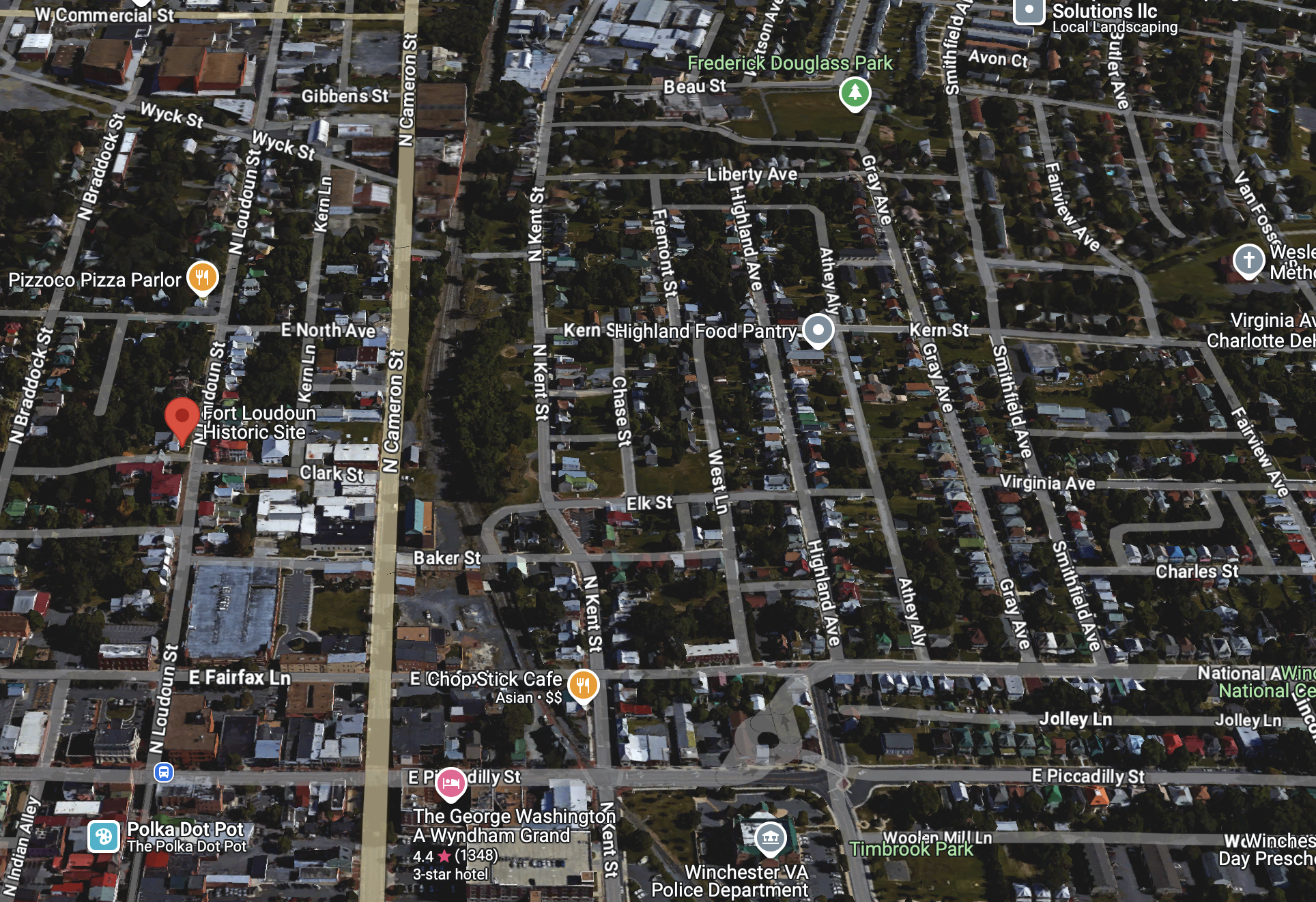
Today, the only remaining feature of Fort Loudoun is Washington’s Well, which is now owned by the French & Indian War Foundation. The rest of the fort has been absorbed into the foundations and walls of the surrounding structures nearby.
- Burnaby, A., Wilson, R. R. & Fauquier, F. (1904) Burnaby’s travels through North America; reprinted from the third edition of. New York, A. Wessels Company. [Pdf] Retrieved from the Library of Congress, https://www.loc.gov/item/04028434/. ↩︎
- Reverend Andrew Burnaby (1734–1812) | Art UK. (n.d.). https://artuk.org/discover/artworks/reverend-andrew-burnaby-17341812-80511 ↩︎
- The New York Public Library. (1889). Portrait of Martha WashingtonRetrieved from https://digitalcollections.nypl.org/items/510d47e0-e05a-a3d9-e040-e00a18064a99 ↩︎
- PBS. (2022, April 7). The Stamp Act | Benjamin Franklin | PBS | A film by Ken Burns [Video]. YouTube. https://www.youtube.com/watch?v=hFVAvYw8-4 ↩︎
- File:1872 Chiefs Cornstalk Logan and Red Eagle from Frosts pictorial history of Indian.jpg – Wikimedia Commons. (2012, August 31). https://commons.wikimedia.org/wiki/File:1872_Chiefs_Cornstalk_Logan_and_Red_Eagle_from_Frosts_pictorial_history_of_Indian.jpg ↩︎
- “From George Washington to William Irvine, 6 August 1782,” Founders Online, National Archives, https://founders.archives.gov/documents/Washington/99-01-02-09045. ↩︎
- WORLD. (2023, November 1). Reframing George Washington’s legacy and American History | Town Destroyer | America ReFramed [Video]. YouTube. https://www.youtube.com/watch?v=pJSa-xWzFsM ↩︎
- Ordinance for the Government of the Territory of the United States North-West of the River Ohio; 7/13/1787; Miscellaneous Papers of the Continental Congress, 1774 – 1789; Records of the Continental and Confederation Congresses and the Constitutional Convention, Record Group 360; National Archives Building, Washington, DC. ↩︎
- Wulff, Frederick. “Alexander McKee: The Great White Elk, British Indian Agent on the Colonial Frontier”, Outskirts Press Denver, Colorado, 2013 ↩︎
- File:James Wood (1741-1813, Virginia governor).jpg – Wikimedia Commons. (n.d.). https://commons.wikimedia.org/wiki/File:James_Wood_(1741-1813,_Virginia_governor).jpg ↩︎
- Wikipedia contributors. (2024, April 5). Hessian (soldier). Wikipedia.
https://en.wikipedia.org/wiki/Hessian_%28soldier%29#/media/File:Hessian_jager.jpg ↩︎ - 1777 Map of Winchester VA | fortloudounva. (n.d.). Fortloudounva. https://jimmoyer1.wixsite.com/fortloudounva/copy-of-maps ↩︎
- 1777 Map of Winchester VA | fortloudounva. (n.d.). Fortloudounva. https://jimmoyer1.wixsite.com/fortloudounva/copy-of-maps ↩︎
- Citation: Travels through the interior parts of America : Anburey, Thomas : Free Download, Borrow, and Streaming : Internet Archive. (1923). Internet Archive. https://archive.org/details/travelsthroughin0002anbu/page/272/mode/2up?q=winchester
↩︎

This exhibit was made possible, in part, by a grant from the VA250 Commission in partnership with Virginia Humanities.

Exhibit researched and written by Jess Pritchard-Ritter, Donna Leight, and David Grosso. Created by For the Love of History Consulting, LLC.