
Researched and written by Donna Leight, 2025
From Rutherford to Peyton
John Peyton purchased Outlot 49 from Robert Rutherford in November 1785, on which Fort Loudoun once stood. He would own the property until his death.1
John built a home on Outlot 49 at what is now 406 N. Loudoun Street around 1780, when he married Robert Rutherford’s daughter Susannah. John’s father Colonel Henry Peyton, lived in the wing.2 Note that at this time, Loudoun Street did not extend beyond Piccadilly.
“Loudoun Street was opened as a road from Cork to Piccadilly in 1761 – through what they termed quagmire… It was not until after 1842 that Loudoun Street was extended from Fairfax Lane north and through the stockade on Federal Hill.” 3
John Peytons estate was involved financially for many years after his death but in 1833, daughter Louisa’s husband, William L. Clark, purchased Outlot 49. Clark had been a tutor of the Peyton children and according to deed records, a school building had been built on the lot for his use, known as the Academy.4
Over the next several decades, Outlot 49 would be split into multiple parcels.
Who Was John Peyton?

It has been difficult to find a lot of information on John Peyton (1757-1800). The Williamsburg Viriginia Gazette newspaper of June 2, 1775, contains both the names of John Peyton and his father Henry.5 It seems they were present during a meeting of the special committee for Prince Williams county, in Dumfries on May 22, 1775. His Excellency Lord Dunmore had made a proclamation and placed it in the publick papers, “charging a certain Patrick Henry, and his followers, with rebellious practices, for extorting from the Receiver General the sum of 330l. in satisfaction for the powder his Lordship thought proper to remove from the publick magazine in Williamsburg…”
The committee found that Dunmore had no right to remove the powder, that the powder should be returned, and that “the powder removed from the publick magazine in Williamsburg did of right belong to this colony. This committee being farther of opinion, that the late violent and hostile proceedings of his Majesty’s troops in the Massachusetts Bay, in attempting to seize the military stores of that colony, would have justified reprisals of a much greater MAGNITUDE, Resolved therefore, unanimously, that the thanks of this committee are justly due to captain PATRICK HENRY, and the GENTLEMEN VOLUNTEERs who attended him, for their proper and spirited conduct on that alarming occasion.”
From this article, we learn that John and his father Henry were actively involved with political events of the day, including those that influenced the American Revolution.
John would remain active in politics, serving in the local general assembly in the 1790’s, approving funding for Winchester projects, and settling complex Fairfax property disputes. He was the first clerk to the first chancery court in 1793.6 Chancery courts dealt with cases that were mainly based on equity and fairness such as trusts, wills, probate, and custody, as opposed to criminal matters.
John and his family lived just below the southeast bastion of Fort Loudoun. He died around 1800. Susannah lived in the home with other family members until her death in 1829.
In 1785, Peyton obtained permission to build on the Commons (old Outlot 49) and multiple buildings were constructed. In 1876, William Greenway Russell wrote “On the west side of Loudoun St, and north of Peyton, stood a tall log building painted yellow, many years ago. About 1820 it was occupied by Thomas Brown, whose wife was a Miss Fawsett. They kept an oyster house… This house was taken down and moved near Fairfax Lane by William L Clark, and fitted for a dwelling… The lot was sold to Joseph Baker…” 7
Mr. Russell also recollects “about the end of the year 1824 or the commencement of 1825, a party from Thespian Hall, who had been indulging in eggnog were invited to take a walk. On arriving at the top of the hill, they found the old “Six Pounder,” a cannon that had been brought to Winchester in 1812, at the time of the organization of Col. William Morris’ company. It was decided to shoot the old year out and welcome the new. The cartridges had been previously prepared, and they gave some dozen rounds. Next day, it was discovered that havoc had been played with Mr. Peyton’s windows, some twenty or more panes of glass being broken. Mr. Samuel Reed was deputized to go and ascertain the damage. The old lady would not listen to any offers for payment, nor would she report the number broken, but treated the ambassador to a glass of wine and some new year’s cake and dismissed him.” 8
It would seem that Susannah Rutherford Peyton inherited the generous heart of her father, Robert Rutherford.
Colonel Henry Peyton (John’s Father)
John’s father Henry, knew Outlot 49 quite well, having served with George Washington in the French & Indian War. Founders Online has several letters between Peyton and Washington.
From George Washington to Henry Peyton,
Winchester, 17 May 1756To Colonel Henry Peyton: of the Prince-William Militia.
Sir,I had yours last night; and observe your dangers from the Indians about the Neighbourhood. I would have you consult with Governor Innes upon the most expedient measures to pursue: and by all means, let me advise you never to be unguarded in case of a Surprize.
I have had some conversation with people from the Branch since I wrote to you last; and find it more requisite to continue your command on these waters, to range and scout about, and to secure the Grain and Cattle of the inhabitants from the Enemy; than to build that Fort on Capecapon, for sometime yet.
Before this reaches you, you may (perhaps) have marched from Pearsalls; as I understand you intend it. Upon your return from escorting Governor Innes, I would have you make Pearsalls your Head-Quarters, and to send out your scouting parties as low as the mouth of the River.
If you learn any further intelligence about the strength and motions of the Enemy, which you may think worth regarding—I desire you would lose no time in communicating it to me. I am &c.
G:W. 9
There are several articles in the Williamsburg Viriginia Gazette that involve Col. Henry Peyton. In 1768, he sold 470 acres in Prince Williams County, where he then lived, as well as 293 acres in Frederick County. In 1771, the same Gazette shows he was involved in a dispute related to Fairfax property settlements. Later in life, Henry served as a Deputy Clerk of the Court in Winchester, March 1789 and John’s brother Henry Peyton Jr, took the oath as attorney at the same time. 10
John & Susannah Peyton’s Children
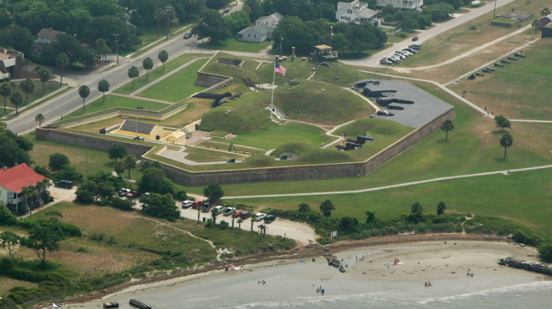
John and Susannah had nine children and many grandchildren. Their oldest daughter, Mary Howe Peyton married Addison Bowles Armistead, who died in February 1813, during the War of 1812, at Fort Moultrie, Chareston, SC. He left three children.11
Their youngest daughter Louisa married William Lawrence Clark. As mentioned above, they would purchase Outlot 49 in 1833 from the Peyton estate. In 1837, Clark would sell “about 1 acre and 20 poles” to Joseph Baker which includes current Loudoun Street properties from Peyton Street (Fort Condominiums) to 419 N. Loudoun Street. Census records show that Louisa and Willliam enslaved eleven men and women in 1850. By 1860, records reflect they had one enslaved man, age 65.
This may have been “Old Jack,” who Mr. Russell recalls in 1876 when he was reflecting :
“When a boy, I have frequently gone to the Fort and dug up cannon balls and grape shot, would borrow tools to dig with from Peyton’s “Old Jack”. An old family servant… had been a body servant of Mr. John Peyton; he was a good old darkey…” 12
Russell also wrote, “I have been informed by John Hodgson, that about the year 1836, whilst he and Mr. Robert Reather, were digging in the foundation for one of the houses now in the fort, they came upon and dug up the skeleton of a man, supposed to have been a British soldier, perhaps an officer. The leather belt was much decayed, the buckle was plated and plating well preserved, though the tongue was rusted off. The spurs also plated, were still on the heels, with rowels rusted out. The heels of the boots still clung together.” 13
Louisa and William’s son, William Lawrence Clark, Jr. served the Confederacy as a captain on Stonewall Jackson’s staff. He later became the mayor of Winchester from 1876-1884 and also served as a judge. Louisa and Williams daughter Susan Peyton Clark married Major Francis B. Jones of Vaucluse, who was also on Stonewall Jackson’s staff. He lost his life in 1862 while serving the Confederacy. 14 15
Many of the Peyton descendants are buried in Winchester’s Mt. Hebron Cemetery. When the cemetery was dedicated in June 1844, “there were so many removals of bodies from the old grave-yards together with slabs and monuments, that the cemetery was given the appearance of age. …William L. Clark, Esq., made the principal address… and Rev. Joseph Baker pronounced the benediction”.16
Rev. Baker purchased part of Outlot 49 in 1837 from the Clarks, including 419 N. Loudoun Street.
- Frederick County Virginia Deed Book 21, Page 170 ↩︎
- Green, Katherine Glass Greene. Winchester Viriginia an Its Beginnings 1743-1814. Shenandoah Publishing House, Strasburg, VA. 1926 ↩︎
- Cartmell, T.K. Shenandoah Valley Pioneers and Their Descendants: A History of Frederick County, Virginia, From its Formation in 1738 to 1908. The Eddy Press Corporation, Winchester, VA 1909 ↩︎
- Quarles, Garland R. The Story of One Hundred Old Homes in Winchester, Virginia. Prepared for the Farmers and Merchants National Bank, Winchester, Virginia 1967 ↩︎
- Williamsburg Virginia Gazette Newspaper Archives, June 2, 1775, page 14. ↩︎
- Cartmell, T.K. Shenandoah Valley Pioneers and Their Descendants: A History of Frederick County, Virginia, From its Formation in 1738 to 1908. The Eddy Press Corporation, Winchester, VA 1909 ↩︎
- Russell, William Greenway. What I Know About Winchester: Recollections of William Greenway Russell, 1800-1891. Volume II: The Winchester-Frederick County Historical Society Papers, 1953 ↩︎
- Ibid. ↩︎
- Founders Online, https://founders.archives.gov, National Archives and Records Administration, From George Washington to Henry Peyton, 17 May 1756 ↩︎
- Cartmell, T.K. Shenandoah Valley Pioneers and Their Descendants: A History of Frederick County, Virginia, From its Formation in 1738 to 1908. The Eddy Press Corporation, Winchester, VA 1909 ↩︎
- Ancestry.com ↩︎
- Russell, William Greenway. What I Know About Winchester: Recollections of William Greenway Russell, 1800-1891. Volume II: The Winchester-Frederick County Historical Society Papers, 1953 ↩︎
- Ibid. ↩︎
- Green, Katherine Glass Greene. Winchester Viriginia an Its Beginnings 1743-1814. Shenandoah Publishing House, Strasburg, VA. 1926 ↩︎
- Barton Colt, Margaretta. Defend the Valley: A Shenandoah Family in the Civil War. Orion Books, New York, 1994. ↩︎
- Green, Katherine Glass Greene. Winchester Viriginia an Its Beginnings 1743-1814. Shenandoah Publishing House, Strasburg, VA. 1926 ↩︎